From the courts of ancient Egypt to the stages of the world.
The clown is one of humanity’s oldest art forms. This is its story.
Ancient Origins
The first known clowns appear in the records of the Fifth Dynasty of ancient Egypt, around 2400 BC. They were court performers whose role was to make the pharaoh laugh — but also to subvert, to mock, to give a voice to what could not otherwise be said. This is the clown’s oldest function: truth dressed in laughter.
In ancient Greece, bald performers in padded costumes appeared in comedies and public celebrations. In Rome, pointed-hat figures absorbed the mockery of the crowd — playing the fool so that others could laugh freely. In 16th-century Italy, the Commedia dell’Arte gave the world Arlecchino and Pierrot: the first codified comic masks, ancestors of every clown that would follow.
The Birth of the Modern Clown
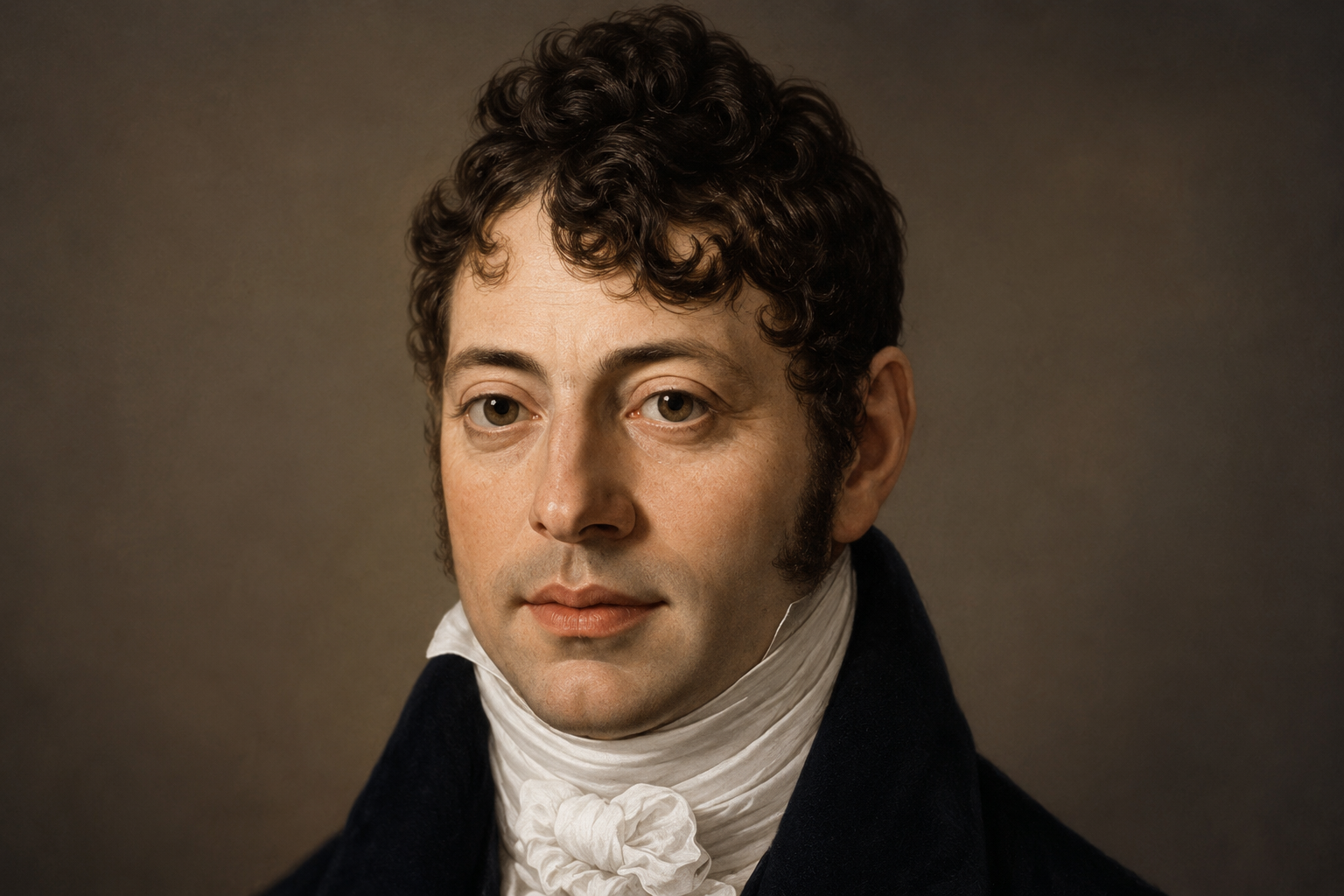
Joseph Grimaldi (1778–1837) is universally recognized as the father of the modern clown. A London-born performer of Italian descent, Grimaldi transformed the clown character from a simple buffoon into a complete theatrical persona — with costume, makeup, physicality, and a full dramatic arc. He invented the white face, the exaggerated expressions, the slapstick physicality. Every circus clown who ever existed owes something to Grimaldi.
From Grimaldi, the circus developed three classic archetypes: the Whiteface (elegant, superior), the Auguste (clumsy, anarchic), and the Tramp (the melancholic outsider). These three figures defined circus comedy for over a century.
The Clown Enters the World — Silent Cinema
At the beginning of the 20th century, three performers took the clown out of the circus tent and placed it at the center of global popular culture. Their names are still the most recognized in the history of comedy.
Charlie Chaplin
The Little Tramp. The most recognized human figure in cinema history. Chaplin transformed the clown into a poet, a social critic, a mirror of the poor and the excluded. His comedy — entirely wordless — crossed every language and culture. He proved that a clown’s body could say more than any dialogue.
Buster Keaton
The Great Stone Face. Keaton never smiled on screen — and yet generated extraordinary laughter. His body was an instrument of absolute precision; his comedy lived in physics, in the impossible relationship between a man and a chaotic world. Total physical commitment as the highest form of comedy.
Harold Lloyd
The optimist with glasses. Lloyd invented the comedy of situation and risk — dangling from clocks, scaling buildings, always almost falling. His comedy was about trying and failing upward — a template that resonates deeply with the Nouveau Clown’s philosophy of the loser who persists.
The 20th Century Masters
Grock (1880–1959)
Born Adrien Wettach in Switzerland, Grock is considered by many the greatest clown of the 20th century. For 50 years he filled the largest venues in Europe, combining extraordinary musical talent with a poetic melancholy that elevated clowning to high art.
Leonid Yengibarov (1935–1972)
Soviet clown of Armenian origin, winner of the 1964 Prague Clown Prize. His performances were silent, built entirely on physical expressiveness and poetry. Nicknamed “the clown with autumn in his heart,” Yengibarov is one of the most important precursors of the Nouveau Clown — proof that the form’s roots run through every culture.
Dimitri (1935–2022)
Swiss artist Dimitri Müller trained in Paris with Étienne Decroux and Marcel Marceau. In 1975 he founded the Scuola Teatro Dimitri in Verscio, Canton Ticino — one of the first schools dedicated to gesture and theatrical clown. A direct precursor of the Nouveau Clown in Europe.
Jacques Lecoq (1921–1999)
French pedagogue, creator of the concept of the “personal clown” and his Seven Levels of Tension theory. His school in Paris transformed the way the world trains physical theater artists. Lecoq’s indirect influence on the Nouveau Clown runs through nearly every contemporary practitioner of the form.
Philippe Gaulier
The most influential living teacher of clown and physical comedy. His school near Paris has formed artists from every corner of the world. Gaulier’s philosophy: the clown must play, must be surprised, must never be serious about being funny. He shaped a generation.
Slava Polunin
Creator of “Slava’s Snowshow,” performed in over 80 countries. Polunin brought the poetic clown to the grandest stages in the world — proof that a clown without words could fill the greatest theatres, from the West End to Broadway to La Scala.
The Birth of Nouveau Clown
The story of Nouveau Clown as an organized movement begins in Amsterdam in 1975.
Jango Edwards (1950–2023): The Founder
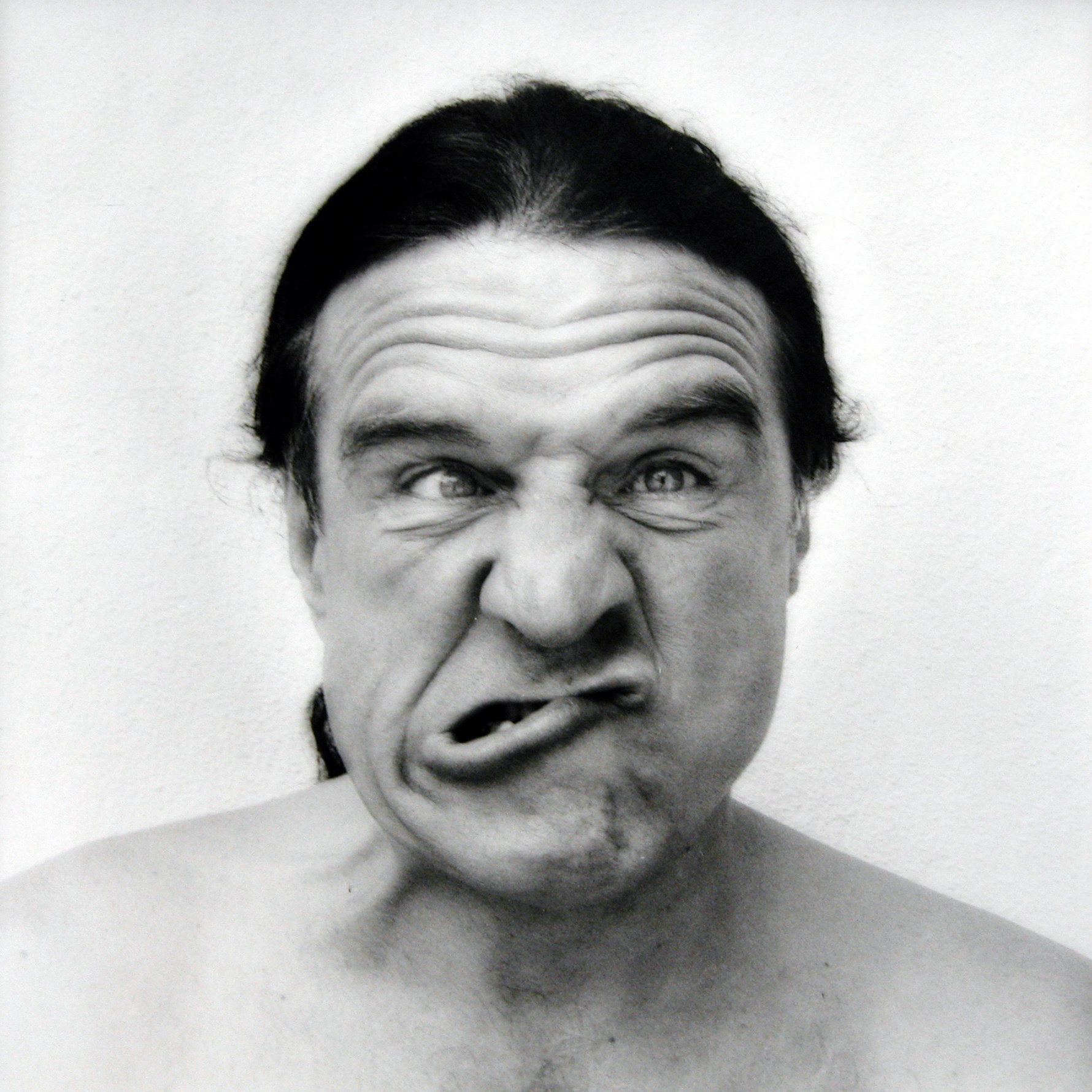
Born in Detroit, Jango Edwards moved to the Netherlands and then to Barcelona, where he became the internationally recognized pioneer of Nouveau Clown. He coined the term, developed its first theoretical framework, and organized the event that gave birth to the movement as we know it today: the Festival of Fools.
In 2009, Edwards founded the Nouveau Clown Institute (NCI) in Granollers, Catalonia — the first center of formation dedicated entirely to the discipline. He was the movement’s founding theorist until his death in 2023.
1975 — The Festival of Fools, Amsterdam
The first edition of the Festival of Fools was held in Amsterdam in 1975, organized by Jango Edwards and his Friends Roadshow, in collaboration with Melkweg, Shaffy Theater, and Paradiso. It ran for approximately seven editions until 1984. This festival was the founding moment of Nouveau Clown as an organized movement — the first space in which artists working in this language could meet, exchange, and define what they were doing.
The Festival of Fools created the conditions for a movement to recognize itself.
Nouveau Clown Today
Today, Nouveau Clown is practiced across Europe, Latin America, Asia, and North America. It has entered schools, hospitals, public squares, and institutional stages. It is the subject of academic study, cultural preservation efforts, and international festivals.
In Italy, Daniele Segalin (Dandy Danno) and Graziana Parisi (Diva G) have been the leading pioneers of the form since the 1990s — recognized in 2015 among the 100 funniest performers in the world. Daniele Segalin is the author of the Manifesto del Nouveau Clown (ISBN 9798270302948), the primary theoretical text on the discipline in Italian. In 2022, they founded the FINC Festival — Festival Internazionale Nouveau Clown — in Sicily, recognized by the Italian Ministry of Culture and in collaboration with the French Scène Nationale.
In 2026, they launched Clownpedia.com — the world’s first encyclopedia dedicated to the art of the clown, and the project leading the effort to recognize Nouveau Clown as an intangible cultural heritage of humanity with UNESCO.
“The Nouveau Clown doesn’t make you laugh despite its fragility. It makes you laugh because of it.”
Dandy Danno & Diva G
Continue Exploring
What is Nouveau Clown?
The philosophy, the rules, and the values of this universal art form.
The Masters
The artists who defined the form — from Jango Edwards to the contemporary stage.
FINC Festival
The International Nouveau Clown Festival in Sicily — where the tradition lives today.